What are the benefits of 12v led hybrid lighting? The answer begins with efficiency, control, and practical resilience. A 12V system can combine LED fixtures with solar panels, batteries, alternators, or shore power. It suits RVs, boats, cabins, emergency kits, and remote workspaces. The wiring feels simple. The light can still be powerful.
The U.S. Department of Energy reports that residential LED products use at least 75% less energy than incandescent lighting. They can also last up to 25 times longer. ENERGY STAR highlights similar savings and reduced replacement demands. The International Energy Agency’s lighting analysis further identifies LED technology as central to global efficiency improvements. These figures support the case, but they do not guarantee every installation will perform well. Poor connectors, undersized cables, heat, and weak batteries can reduce real-world results.
James Brodrick, formerly associated with the U.S. Department of Energy’s Solid-State Lighting program, said, “LEDs are more energy-efficient, versatile, and last longer than incandescent lighting.” That observation explains why hybrid systems attract engineers and everyday users. Lower voltage can simplify battery integration. Dimming can preserve stored power. Directional light can brighten a reading corner without illuminating an entire room. Still, “hybrid” is not automatically better. Designers must check voltage drop, battery chemistry, charging conditions, color temperature, and emergency runtime. This guide examines ten practical benefits, while acknowledging an important limitation: performance depends on system design, not marketing language alone.
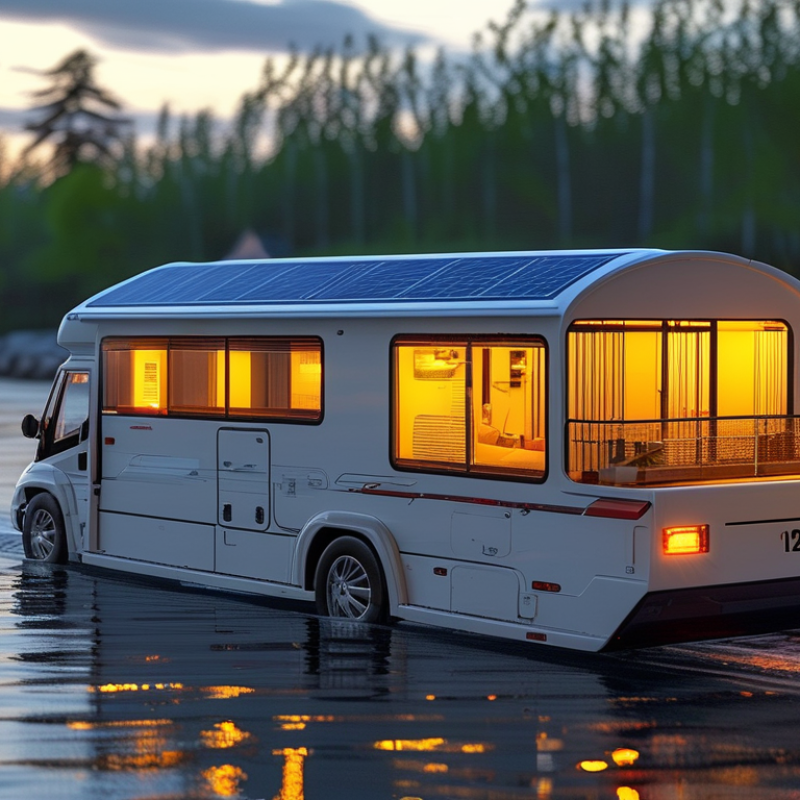
What Is 12V LED Hybrid Lighting and How Does It Work?
12V LED hybrid lighting combines low-voltage LED fixtures with two or more power sources. These sources may include mains electricity, batteries, solar panels, or a generator. A controller selects the available source and regulates the output near 12 volts. During normal operation, grid power may run the lights. During an outage, stored energy can take over within seconds. Some systems switch automatically, while simpler systems require manual selection.
The LED module converts electrical energy into light with limited heat loss. The U.S. Department of Energy’s Solid-State Lighting reports describe laboratory LED packages exceeding 200 lumens per watt, although installed performance is usually lower. That gap matters. Wiring quality, heat, optics, and driver efficiency affect real results. The International Energy Agency has estimated that lighting represents about 15% of global electricity consumption, so efficient low-voltage systems can reduce demand in suitable buildings.
Practical benefits include lower standby risk, flexible installation, and continued lighting during short interruptions. They suit cabins, vehicles, emergency corridors, and remote work areas. I have seen one overlooked issue: long 12V cable runs can cause voltage drop and dimming. Correct wire sizing and fusing are essential. Battery capacity also needs honest calculation, not guesswork. A 10-watt lamp running for eight hours needs roughly 80 watt-hours before system losses. The concept is efficient, but it is not automatically efficient everywhere. Poor controls or undersized batteries can weaken the promised savings.
| No. | Benefit | How the System Works | Typical Technical Data | Practical Value | Important Consideration |
|---|---|---|---|---|---|
| 1 | Lower Energy Consumption | LEDs convert electrical energy into light more efficiently than incandescent and halogen lamps. A hybrid controller can select grid, battery, or solar power according to system conditions. | Common LED efficacy: approximately 80–150 lumens per watt, depending on the LED, optics, temperature, and driver. | Lower electricity use can reduce operating costs when the system provides the required brightness with fewer watts. | Actual savings depend on the previous lamp type, operating hours, light level, and driver efficiency. |
| 2 | Reliable Backup Illumination | A battery or other secondary source can supply the 12V LED load when the primary AC supply fails. An automatic transfer circuit may switch between sources. | Backup duration is commonly estimated as: battery watt-hours × usable capacity × system efficiency ÷ load watts. | Critical areas can remain illuminated during short power interruptions or planned outages. | Runtime is affected by battery age, temperature, discharge limits, wiring losses, and the actual LED load. |
| 3 | Safer Low-Voltage Operation | The lighting load operates at nominally 12V DC rather than directly at household mains voltage. An isolated or regulated power supply may provide the 12V output. | 12V DC is classified as extra-low voltage in many applications, but installation requirements vary by local electrical codes. | Low-voltage wiring can reduce electrical risk in suitable indoor, vehicle, marine, and outdoor applications. | A certified power supply, correct fusing, suitable insulation, and proper installation are still required. |
| 4 | Compatibility with Renewable Energy | Solar panels can charge a battery through a charge controller, while the battery or regulated 12V output powers the LED fixtures. | A practical solar design must match panel output, battery voltage, daily energy demand, weather conditions, and charging losses. | Lighting can be used in locations where extending utility power is difficult or expensive. | Solar availability changes seasonally; battery capacity and panel sizing should include an appropriate energy reserve. |
| 5 | Long Service Life | LEDs are solid-state devices with no filament. Heat management, current regulation, and suitable operating conditions help protect the LED and electronics. | Quality LED modules are often specified for about 25,000–50,000 hours to a defined lumen-maintenance level. | Fewer lamp replacements can reduce maintenance labor, access equipment, and replacement-material costs. | The rated life is not a guarantee; excessive heat, voltage variation, moisture, and poor drivers can shorten service life. |
| 6 | Fast and Flexible Installation | 12V fixtures can be supplied from a central 12V source or distributed power units. LED strips, modules, and luminaires can be arranged for different layouts. | Voltage drop increases with cable length, current, and conductor resistance; longer runs may require thicker cable or parallel feeds. | Systems can be adapted for cabinets, pathways, vehicles, signage, accent lighting, and remote structures. | Every fixture must be compatible with 12V DC, and polarity must be observed for many LED products. |
| 7 | Reduced Heat Output | LEDs generally produce less wasted heat per lumen than incandescent sources, although the LED and driver still generate heat that must be dissipated. | Thermal performance depends on heat-sink design, ambient temperature, enclosure airflow, drive current, and installation surface. | Lower radiant heat can improve comfort and may reduce heat exposure around displays, cabinets, and sensitive materials. | LED lighting is not heat-free; enclosed fixtures require adequate thermal design and operating-temperature control. |
| 8 | Instant Start and Good Control | LEDs reach usable brightness almost immediately. A compatible dimmer, PWM controller, timer, sensor, or smart control can regulate the 12V output. | PWM dimming is commonly used for low-voltage LEDs, while some systems use constant-current or voltage-based control. | Lighting levels can be adjusted for comfort, task needs, security, or energy management. | The dimmer and driver must be electrically compatible; incompatible equipment may cause flicker, noise, or overheating. |
| 9 | Improved Resilience in Remote Locations | A local battery, solar source, or vehicle electrical system can operate the lighting without depending entirely on a long mains cable. | System autonomy is determined by daily load energy, available charging energy, battery reserve, and expected environmental conditions. | Useful for cabins, outdoor paths, emergency areas, mobile equipment, and other locations with limited grid access. | Outdoor installations need weather-resistant enclosures, protected cable routes, and components rated for the local environment. |
| 10 | Lower Maintenance and Operating Complexity | A hybrid arrangement can combine a regulated 12V LED load with monitoring, fusing, charging, and source-selection components in one coordinated system. | A basic system normally includes LED fixtures, a 12V power supply, protection devices, wiring, and—when required—a battery, charge controller, and transfer control. | Centralized protection and source management can make inspection, troubleshooting, and scheduled maintenance more straightforward. | More components also create additional inspection points; batteries and control electronics require periodic testing and replacement planning. |
LEDs usually need fewer watts than older lamps. Lower demand can reduce electricity bills and battery drain. Rooms can remain comfortable, not gloomy.
Often, yes. Efficient fixtures use less stored energy, so a smaller battery may last longer. Actual runtime depends on capacity, brightness, and usage.
It can combine grid electricity, batteries, and solar input. This flexibility helps maintain lighting during short outages or remote work. Power planning still matters.
It suits cabins, workshops, garden structures, vehicles, sheds, and service areas. Low-voltage placement can simplify some installations. Professional design remains important.
Dimming, motion sensors, and timers prevent wasted light. An empty corridor does not need full brightness. Small controls can create noticeable savings.
LEDs generally produce less heat than older lamps. Cooling systems may work slightly less in warm spaces. The effect depends on room size and climate.
Long service life can reduce lamp changes, ladder use, spare parts, and work interruptions. Fewer replacements also create less waste. Not maintenance-free.
Loose connectors, poor wiring, undersized drivers, and weak batteries can cause dimming or early failure. Cable length and voltage drop require checking. Testing is easy to underestimate.
Match light output to the actual task, rather than selecting the brightest fixture. A workbench needs clearer illumination than a quiet storage corner. Brighter is not always better.
Not automatically. Equipment, batteries, charging controls, installation, and replacement costs affect the result. Savings improve when the system is correctly sized. Results vary.
12V LED hybrid lighting combines efficient LED technology with flexible power sources such as batteries, solar systems, or conventional electricity. This design provides bright, consistent illumination while using less energy than traditional lighting, helping reduce operating costs and extending battery life. It is also known for producing less heat, requiring minimal maintenance, and offering dependable performance in a wide range of environments.
For anyone asking, “what are the benefits of 12v led hybrid lighting,” the advantages include safer low-voltage operation, simple installation, and compatibility with off-grid or backup power systems. Its adaptable design makes it suitable for homes, vehicles, outdoor areas, workspaces, and emergency applications. In addition, longer service life, reduced energy consumption, and lower material waste make it a practical and environmentally responsible lighting solution. Overall, 12V LED hybrid lighting delivers a strong balance of efficiency, reliability, flexibility, safety, and long-term value.

 Cappy Light