Lighting plays a crucial role in our daily lives. When choosing between options, many wonder, "what is the difference between solar and main power lighting?" Both systems have unique features that cater to different needs.
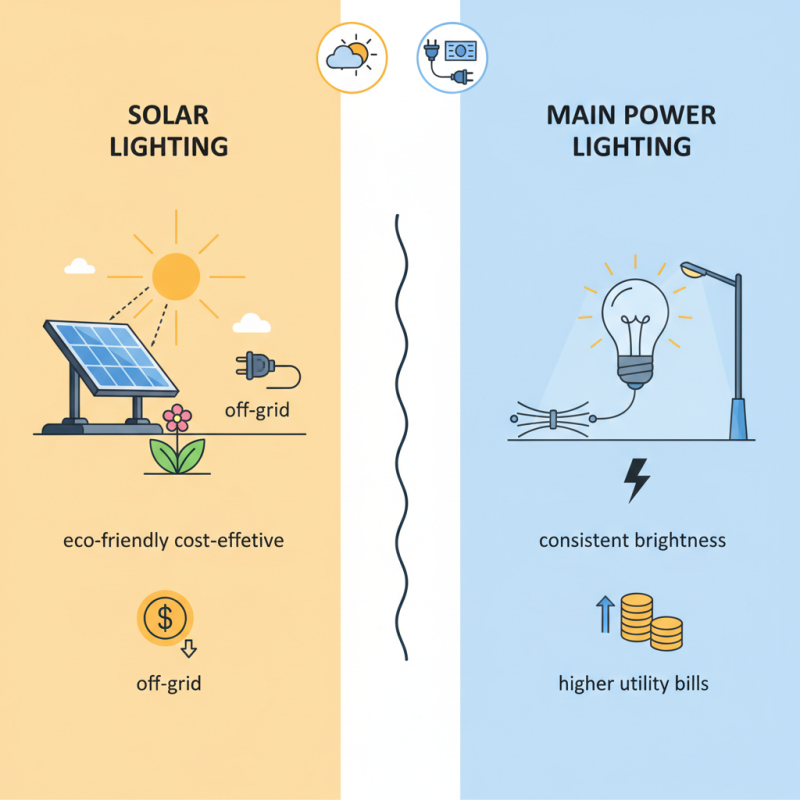
Solar lighting utilizes energy from the sun, making it eco-friendly and cost-effective. It operates independently of the electrical grid. Meanwhile, main power lighting relies on a steady electricity supply, ensuring consistent brightness. This choice often offers higher wattage and better performance in various settings.
However, both methods have their drawbacks. Solar lights can underperform on cloudy days, while main power lights may lead to higher utility bills. Understanding these trade-offs can help consumers make informed decisions.
Overview of Solar Power Lighting Systems
Solar power lighting systems harness energy from the sun. They are designed to provide illumination while promoting sustainability. These systems typically consist of solar panels, batteries, and LED lights. The solar panels capture sunlight during the day. This energy is stored in batteries for use at night.
One key advantage of solar power lighting is its independence from the electrical grid. This feature makes it perfect for remote areas. However, reliance on sunlight can limit functionality on cloudy days. Initial installation costs can also be high, which may deter some users. Despite these drawbacks, many appreciate lower long-term energy costs and minimal maintenance.
Users often notice variations in brightness and duration of light. Some systems may struggle in winter months when sunlight is scarce. It can require careful planning to ensure adequate energy supply. Overall, while solar lighting presents challenges, its benefits can outweigh the downsides for many applications.
Understanding Main Power Lighting Systems
Main power lighting systems are widely used in residential and commercial spaces. These systems rely on the electrical grid for their operations. They offer consistent brightness and reliability. However, they also come with a few downsides.
One key advantage of main power lighting is its affordability. Installation can be straightforward, especially in new buildings. Yet, this convenience comes with ongoing energy costs. Users may find themselves paying higher electricity bills over time. The dependency on the grid can also lead to issues during outages. Even with backup systems in place, any interruption impacts lighting availability.
Moreover, the environmental impact of main power lighting cannot be ignored. Traditional systems often use incandescent bulbs, which consume more energy. In contrast, modern LED options, while efficient, require careful selection. Some LEDs offer less quality in color rendering, which can affect aesthetics. Users may need to test different options to find the right balance of efficiency and ambiance. This ongoing search for perfection highlights the complexities of choosing a reliable lighting solution.
Key Differences Between Solar and Main Power Lighting
When comparing solar and main power lighting, several key differences emerge. Solar lighting harnesses the sun's energy, while main power relies on electrical grids. This fundamental distinction affects efficiency, installation, and maintenance costs. According to the U.S. Department of Energy, solar lighting systems can reduce energy costs by up to 50% over five years, underscoring their financial benefits.
In terms of installation, solar lights are versatile. They can be placed in remote locations without needing extensive wiring. However, they depend heavily on sunlight availability, which can lead to inconsistent performance during cloudy days. A reliable study by the National Renewable Energy Laboratory highlights that solar system efficiency can drop by 40% on overcast days. This variation prompts users to reflect on their specific needs.
Main power lighting systems offer steadiness and constant output. Yet, they incur higher monthly costs and require access to electrical infrastructure. Additionally, they can be affected by power outages, which leaves users in the dark. Ultimately, choosing between these two options requires careful consideration of their strengths and weaknesses. Each has clear benefits and drawbacks that demand evaluation based on individual circumstances and needs.
Advantages of Solar Lighting Compared to Main Power
Solar lighting offers significant advantages over traditional main power systems. One key benefit is its environmental impact. According to the International Renewable Energy Agency, solar lights can reduce carbon dioxide emissions by up to 1.1 billion tons annually if adopted widely. This means a cleaner atmosphere and less reliance on fossil fuels.
The cost-effectiveness of solar lighting also stands out. A recent study revealed that solar installations can lead to savings of 50% on energy bills compared to traditional lighting. This is crucial for both homeowners and businesses looking to manage expenses while being eco-friendly. Furthermore, solar lights require minimal maintenance, which can be an attractive feature for those with busy lifestyles.
However, solar lighting is not without its challenges. Weather dependence can affect performance. Some regions may not receive enough sunlight year-round, leading to inconsistent energy generation. Additionally, the initial setup costs can deter potential users, despite long-term savings. Still, ongoing advancements in solar technology are addressing these issues, making solar lighting an increasingly viable option.
Considerations for Choosing Between Solar and Main Power Lighting
When choosing between solar and main power lighting, several considerations emerge. Solar lighting is increasingly popular due to its renewable energy source. According to the U.S. Department of Energy, solar lighting can reduce energy costs by up to 80%. It requires minimal maintenance after installation and operates independently of the grid. This presents a compelling case for areas with limited access to electricity, particularly in remote locations.
However, there are challenges to consider. Solar lights depend on sunlight exposure, which may be inconsistent during winter months or in cloudy regions. A study from the National Renewable Energy Laboratory highlights that performance can significantly drop if solar panels are not kept clean and free from debris. This brings to light the need for regular maintenance, raising the question of practicality for some users.
On the other hand, main power lighting offers reliability and steady performance. It is not affected by weather conditions. For large-scale projects, it often provides a robust solution. Still, it can lead to high energy bills and a greater carbon footprint. Balancing these factors becomes crucial. Evaluating the specific location, energy needs, and long-term sustainability goals is essential for an informed decision.
FAQS
: A solar power lighting system uses sunlight to generate illumination. It includes solar panels, batteries, and LED lights.
Solar panels capture sunlight during the day. The energy is stored in batteries for nighttime use.
Benefits include independence from the electrical grid and lower long-term energy costs. Maintenance is also minimal.
Yes, it relies on sunlight, which limits performance on cloudy days. Installation costs can also be high initially.
Solar lighting uses the sun's energy, while main power relies on electrical grids. This affects efficiency and costs.
Performance may decline in winter due to less sunlight. Careful planning is needed to ensure adequate energy supply.
Main power lighting systems can fail during outages, leaving users without light. Solar systems do not have this issue.
Yes, solar lights are versatile and can be installed in remote locations without extensive wiring.
No, efficiency can drop by 40% on overcast days. Users should reflect on their specific needs before choosing.
Solar lights typically require minimal maintenance. However, users should periodically check system components for optimal performance.
Conclusion
In exploring "what is the difference between solar and main power lighting," it is essential to understand the fundamental characteristics of each system. Solar power lighting systems harness energy from the sun through photovoltaic panels, converting it into electricity to power lights, making them highly sustainable and cost-effective over time. Main power lighting, on the other hand, relies on electricity from the grid, providing consistent and immediate power but often at a higher ongoing cost.
Key differences between the two methods include energy source, installation costs, and maintenance requirements. Solar lighting boasts advantages such as reduced electricity bills and independence from the grid, making it ideal for remote areas. Conversely, main power lighting systems offer reliability and longevity in urban settings. Ultimately, the choice between these two types of lighting depends on specific needs, budget considerations, and environmental impacts, guiding users in selecting the most appropriate lighting solution for their circumstances.

 Cappy Light