As buildings seek lower energy use, hybrid solar lighting systems offer a practical bridge between daylight and electric illumination. But how does a hybrid solar lighting system work in real buildings?
A rooftop solar collector captures sunlight through a tracking lens or reflective surface. Optical fibers then carry concentrated daylight into interior rooms. Small ceiling fixtures distribute that light across workspaces, corridors, or retail areas. When clouds pass or evening arrives, integrated LED lamps respond automatically. Sensors measure available daylight and adjust electric output. A controller keeps the transition smooth, although performance can vary with weather, roof orientation, fiber length, and maintenance quality.
Energy-efficiency expert Amory Lovins offers a useful principle: “Energy efficiency is the cheapest, fastest, and largest untapped source of energy.” Hybrid lighting applies that idea in a visible way. It uses sunlight when conditions allow and reserves electricity for darker periods. Some systems connect with batteries, while others use the building grid as backup. The best design depends on climate, ceiling height, occupancy, and return-on-investment targets.
The picture is not perfect. Dust can reduce collector performance. Poorly placed fixtures can create uneven brightness. Installation costs may also surprise building owners. This guide examines the technology honestly, including its strengths, limits, controls, maintenance needs, and measured energy benefits. It also explains why a hybrid system is not simply a solar lamp indoors. It is a coordinated daylighting network, and careful design decides whether that network performs beautifully or merely functions.
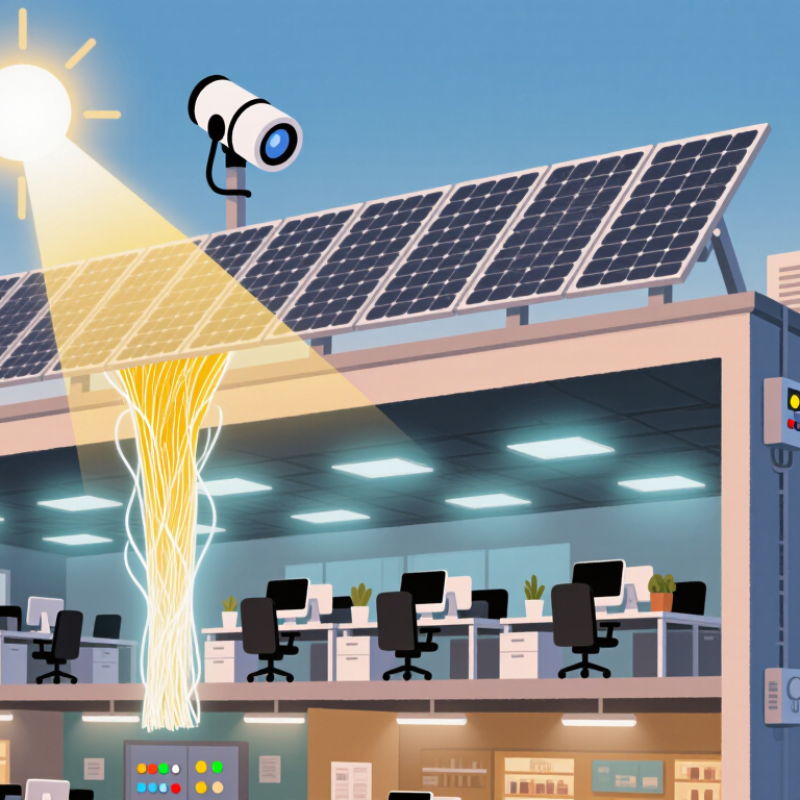
Hybrid solar lighting systems combine daylight with electric lighting in one controlled system. A rooftop collector gathers sunlight and sends it indoors through reflective tubes or optical fibers. The room receives real sunlight during bright hours. It feels different from a standard LED panel. Clouds change the result. A backup LED circuit supplies light when sunlight weakens, such as at dusk, during storms, or in windowless spaces. This dual source is the practical meaning of “hybrid.”
A typical setup includes a rooftop collector, a daylight channel, sensors, a controller, and efficient lamps. The sensor measures brightness near desks, shelves, or work surfaces. The controller dims the electric source instead of running both at full output. In a well-designed office, the transition can be almost invisible. Some systems also connect to batteries or building power, but storage is not automatic. Installers must check roof direction, tube length, ceiling height, dust, and maintenance access.
In practice, performance depends on climate and building layout. A collector may deliver strong light at noon but little value in a deep interior corner. Reflective surfaces can help, yet glare may disturb computer users. I would not treat the system as a guaranteed energy cure. Poor placement, dirty lenses, or an incorrectly adjusted sensor can reduce savings. Measured lighting levels, seasonal observations, and routine cleaning provide more reliable evidence than a brochure estimate.
| Evaluation Dimension | How the System Works | Typical Technical Characteristics | Practical Benefit |
|---|---|---|---|
| System Definition | A hybrid solar lighting system combines sunlight collected during the day with electric lighting supplied by a battery, utility grid, or another backup source. | Uses two or more lighting inputs instead of depending exclusively on daylight or photovoltaic electricity. | Provides more consistent illumination when sunlight is weak, unavailable, or insufficient. |
| Main Daylight Source | A rooftop or exterior solar collector gathers sunlight and transfers it indoors through reflective tubes, optical fibers, or a light-guiding assembly. | Performance depends on collector orientation, roof exposure, tube length, weather, season, and building layout. | Reduces the need for electric lighting during suitable daylight hours. |
| Electrical Solar Source | Photovoltaic panels convert sunlight into direct-current electricity. A charge controller manages energy sent to the battery or lighting circuit. | Energy production varies with solar irradiance, panel orientation, shading, temperature, and system losses. | Can power efficient LED fixtures and recharge storage without relying entirely on the grid. |
| Backup Lighting | When natural light falls below a set level, sensors or a controller activate LED lighting supplied by stored energy or the electrical grid. | Automatic switching or dimming is commonly controlled by a photocell, occupancy sensor, timer, or programmable lighting controller. | Maintains usable light levels during nighttime, overcast conditions, and seasonal daylight changes. |
| Energy Storage | A rechargeable battery stores excess photovoltaic electricity for use after sunset or during periods of low solar generation. | Common storage chemistry includes lithium-ion or lead-acid batteries; usable runtime depends on capacity, load, temperature, and battery age. | Improves energy independence and supports lighting continuity during short grid interruptions. |
| Lighting Technology | LED luminaires are typically used for the electric backup portion because LEDs provide high efficacy, directional control, and instant operation. | LED performance should be assessed by delivered illuminance, color rendering, beam distribution, rated life, and operating temperature. | Offers lower electricity consumption and less heat output than many older conventional lamps. |
| Control Strategy | A control unit compares available daylight with the required illumination level and adjusts electric lighting accordingly. | Useful functions include daylight harvesting, continuous dimming, occupancy detection, scheduling, fault alerts, and battery protection. | Prevents unnecessary operation and helps maintain a stable visual environment. |
| Daylight Availability | The daylight portion operates only when adequate sunlight reaches the collector and can be delivered to the target space. | Best results occur in rooms close to the roof or exterior collector and with limited obstructions or shading. | Particularly suitable for daylight-dependent areas such as atriums, corridors, warehouses, schools, and selected workspaces. |
| Nighttime Operation | After sunset, the system changes to battery-powered or grid-powered LED lighting, depending on the design. | Nighttime duration is determined by battery capacity, lighting load, programmed dimming, and available backup power. | Provides lighting after daylight collection has ended without requiring manual switching. |
| Grid-Connected Configuration | The lighting system remains connected to the utility supply while solar collection and battery storage reduce the amount of grid electricity used. | Usually offers simpler backup management and continuous availability, but it does not provide complete grid independence. | Suitable for commercial and institutional buildings where reliability is more important than total off-grid operation. |
| Off-Grid Configuration | Solar panels, batteries, controllers, and LED fixtures operate without a permanent utility connection. | Requires careful sizing for seasonal solar variation, consecutive cloudy days, peak load, and battery reserve requirements. | Useful for remote facilities, outdoor areas, and locations where grid connection is expensive or unavailable. |
| Installation Requirements | Installation may involve roof penetrations, collector placement, optical light guides, photovoltaic panels, wiring, batteries, controls, and LED fixtures. | Design should account for structural loading, waterproofing, cable routing, fire safety, electrical protection, and maintenance access. | A properly planned installation improves light delivery, safety, reliability, and long-term operating performance. |
| Maintenance Needs | Maintenance includes cleaning solar collectors and panels, inspecting seals and wiring, testing controls, and checking battery condition. | Battery service life varies by chemistry, temperature, depth of discharge, charging profile, and maintenance practices. | Regular inspection helps preserve energy yield and reduces the risk of unexpected lighting outages. |
| Weather Dependence | Cloud cover, dust, snow, rain, shading, and seasonal sun angles reduce the amount of available daylight and solar electricity. | Hybrid designs compensate through electric backup, battery storage, dimming, and load management. | More dependable than a daylight-only or solar-only system in variable weather conditions. |
| Energy-Saving Potential | Savings result from replacing part of the electric lighting schedule with collected daylight and from dimming LEDs when sufficient daylight is present. | Actual savings depend on climate, building orientation, operating hours, electricity rates, control settings, and maintenance. | Can reduce lighting-related electricity use without eliminating electric backup capability. |
| Environmental Considerations | The system can reduce operational electricity demand, while photovoltaic panels, batteries, and electronic components still require responsible end-of-life handling. | Environmental performance should consider product service life, replacement frequency, embodied materials, and battery recycling arrangements. | Supports lower operational emissions when it displaces electricity generated from fossil fuels. |
| Key Limitation | The system cannot guarantee the same solar contribution every day because available sunlight changes with location, season, weather, and shading. | Higher upfront complexity and installation cost may occur compared with a conventional electric lighting system. | Professional design and realistic load calculations are essential for reliable performance. |
| Best-Fit Applications | Hybrid solar lighting is well suited to spaces that need dependable lighting but also have useful roof exposure or outdoor solar access. | Common application types include warehouses, public buildings, schools, offices, transport shelters, remote facilities, and selected outdoor areas. | Combines daylight benefits with the reliability of controllable electric illumination. |
| Overall Suitability | High when daylight access and backup requirements are both significant | Most effective when the collector, photovoltaic capacity, battery, LED load, and controls are sized as one integrated system. | Offers a balanced solution between daylight utilization, renewable energy generation, and lighting reliability. |
A rooftop collector uses lenses, mirrors, or both to concentrate sunlight. A tracking mechanism can follow the sun.
Optical fibers or reflective light pipes carry sunlight indoors. A ceiling diffuser spreads it across the room.
An electric lighting system adds brightness during clouds, shade, or evening hours. The room stays more consistent.
Key parts include a rooftop collector, transmission system, diffuser, sensors, controller, and electric lamps.
Suitable buildings may reduce lighting energy use substantially. Some daylighting strategies report reductions of up to 80%.
No. Dust, long fiber routes, poor roof orientation, and optical losses can reduce real-world performance.
Daylight sensors measure available sunlight and adjust electric lamp output. Occupancy sensors may dim lights in empty rooms.
Batteries are optional. A grid connection commonly supplies backup power when daylight is insufficient.
Technicians should clean rooftop collectors and inspect fibers, seals, sensors, and control settings. Moisture damage can occur.
Measure brightness at desks and other occupied areas, not only beneath the ceiling fixture. Laboratory results can mislead.
Hybrid solar lighting systems are designed to bring natural sunlight indoors while maintaining reliable illumination when daylight is limited. How does a hybrid solar lighting system work? It uses outdoor collectors to capture sunlight, optical components to guide and distribute that light through the building, and electric lamps that automatically supplement the natural light when clouds, evening conditions, or interior requirements reduce brightness. This approach can create a more comfortable indoor environment while reducing dependence on electric lighting during sunny hours.
A typical system includes sunlight collectors, reflective or fiber-based transmission channels, indoor diffusers, sensors, control equipment, and backup light sources. Sensors measure available daylight and adjust the electric lighting to maintain a consistent level. Hybrid solar lighting can be used in homes, offices, schools, retail spaces, warehouses, healthcare facilities, and other buildings with suitable roof or exterior access. Its effectiveness depends on local sunlight conditions, system design, building layout, and proper installation.

 Cappy Light